

Category: Uncategorized
-
IMAGE/TEXT/BODY (SZTE, IEAS)
Session 1
Kovács Ágnes Zsófia. Text and image in Edith Wharton’s travelogues
Kérchy Anna. Tracing a Story in a Network of Cracks: Ekphrasis, Ellipsis, and Craquelure as Instruments of Feminist Politics/Poetics of in Chloé Aridjis’ Asunder
Fodor András. The hole surrounded by walls: Visual and verbal (non)-representation of urban space in China Miéville’s Un Lun Dun
Kocic-Zámbó Larisa. The Feminist Potential of Intermedial Narratives in Peter O’Donnell’s Modesty Blaise Comic Strips
Bálint Emma. “[It] came from the woods (most strange things do).” Exploring the gruesome stories and landscapes of Emily Carroll’s Through the Woods
Session 2
Tóth Andrea. “Trapped between silence and speech: the process of victimization in The Leftovers“
Szarvas Réka. “My skin, you see, screams”: A corporeal narratological analysis of Gillian Flynn’s Sharp Objects
Tóth Zsófia Anna. Lady Susan’s Comic Transfigurations across Media
Csetényi Korinna. Vampires Demythologized: Richard Matheson’s I Am Legend
-
Paul Turnbull and Gabriele Weichart
The Australian Experience of Living with Extreme Weather
The causes of climate change continued to be vigorously debated. But regardless of the relative weight given to human agency or natural forces in contributing to atmospheric warming, the fact is that, over the past two decades, many parts of the world have experienced an increasing number of extreme weather events, such as prolonged droughts and atmospheric wind-and-pressure systems generating winds of over 200 kilometres an hour.
Australia has a long history of extreme weather which has profoundly influenced how people have lived on the continent for some 70,000 years. Before the arrival of European colonists in the late eighteenth century, Australia was home to over two hundred different Indigenous societies, many of which were well adapted to living through drought and other commonly experienced catastrophic weather events, as we will discuss in this paper. The history of European colonisation has in turn been a history profoundly shaped by the experience of extreme weather.
In our paper, we discuss our research on how people have lived with extreme weather in the southern wet tropics region of coastal North-Eastern Australia.
In this part of Australia, monsoonal rains frequently cause severe flooding of a complex network of local waterways. For thousands of years the region has also experienced cyclones – atmospheric wind-and-pressure systems of varying severity – during an annual monsoonal rainy season.
As in other parts of the Australian continent, local Aboriginal societies successfully adapted to the prevailing environmental conditions. Knowledge of the local ecology and weather, including the ability to predict heavy rains and cyclones and their effects on the environment, and suitable coping strategies were necessary survival skills among Indigenous societies in pre-contact Australia. Extended social networks based on kinship, mutual obligations and land ownership further reduced their vulnerability and enhanced their resilience. Knowledge as well as relations were embedded in a religious belief system which explained and ordered the social and natural universe.
When white settlers first arrived in the 1860s, they introduced cattle farming and intensive agriculture. They were faced with needing to quickly learn about their new natural and social environment and to develop strategies of adaptation to a sub-tropical environment.
In this paper we focus in particular on how communication, consultation and knowledge transfer between Indigenous people and settlers about the weather and other environmental issues occurred. We also discuss what lessons studying the history of human habitation of North-Eastern Coastal Australia provides for a future which seems certain to be characterised by more frequent cyclonic events of destructive magnitude.
Paul Turnbull is a Professor of History and Digital Humanities at the University of Tasmania, and an Honorary Professor of History at the University of Queensland. He is best known for his research on the history of European scientific interest in Aboriginal Australians during the nineteenth and early twentieth centuries. His publications include Science, Museums and Collecting the Indigenous Dead in Colonial Australia (Palgrave Macmillan, 2017).
Gabriele Weichart is a Senior Lecturer and Researcher in the Department of Social and Cultural Anthropology at the University of Vienna, and an Associate Researcher in the School of Humanities at the University of Tasmania. Her current research focuses on cultural change in the wake of natural disasters in Eastern Java and several other regions of Indonesia. Her publications include the collection (co-edited with Françoise Douaire-Marsaudon) Les dynamiques religieuses dans le Pacifique: Formes et figures contemporaines de la spiritualité océanienne (CREDO: 2010), and (co-edited with Hermann Mueckler) Australien: 18. bis 20. Jahrhundert. Geschichte ind Gesellschaft (Promedia: 2011).
-
Nóra Séllei
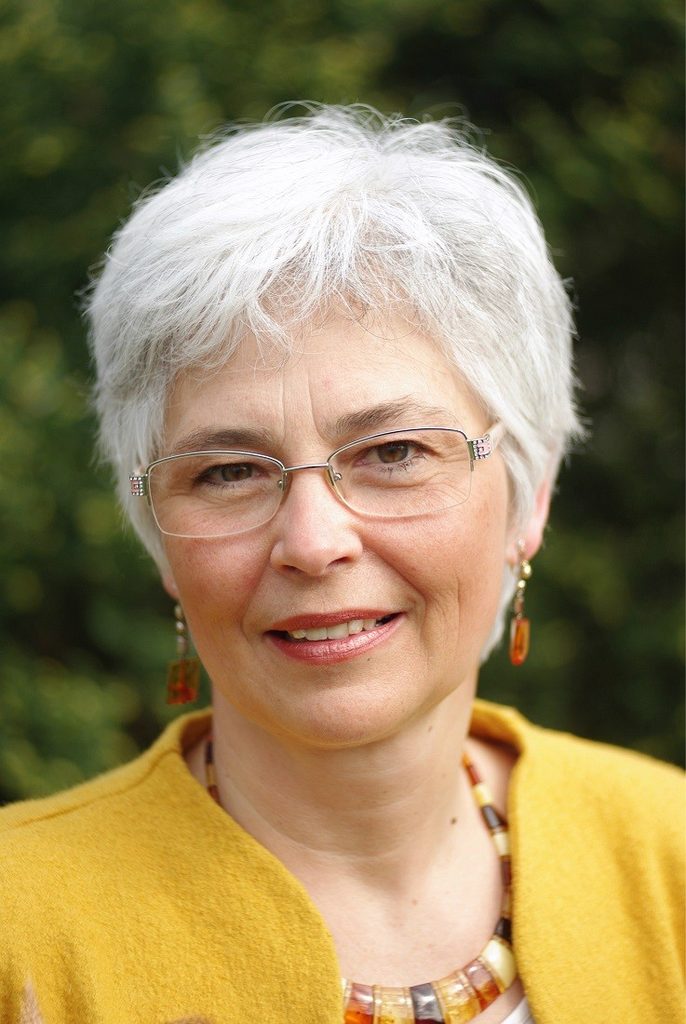
A Symptomatic Reading of the Sensation Novel: The Case of Mary Elizabeth Braddon’s Lady Audley’s Secret
A typical mid-nineteenth-century genre, the sensation novel can be read symptomatically: it reveals not only several aspects of the Victorian period, but also exposes the limits of realist representation and problematizes some contemporary modes of a gradually extending literacy. In this respect, the sensation novel functions similarly to the Gothic novel (both in its classical, 18th-century version and in its later developments, including contemporary literature) because it can be interpreted as a literary code for expressing phenomena that are close to impossible to mediate within the framework of the realist novel. Focussing on various forms of criminality and using contingency as a key structural element, the stakes of the sensation novel are the questions of legitimacy related to the foundations of the established society and the (relative) certainty provided by the metonymical narration of the realist novel. Revolving around Lady Audley, who commits a series of crimes (fake identity, forgery, bigamy, arson, attempted murder), Braddon’s novel challenges notions of decency and propriety, explores the contemporary construction of femininity, and takes issue – and a gendered issue at that – with the Bildungsroman. Harking back to Defoe’s Moll Flanders, the text asks questions about the legitimacy and the legitimate narrative of a self-made woman.
Nóra Séllei is Professor at the Department of British Studies at the Institute of English and American Studies, University of Debrecen, Hungary, and at the Department of English, Catholic University, Ruzomberok, Slovakia. She gained three postgraduate degrees: PhD, “habilitation”, and DSc. Her main teaching and research areas include gender studies, feminist literary theory, and 19th and 20th-century women’s literature, primarily novelists and autobiographers. Her publications include five monographs: Katherine Mansfield and Virginia Woolf: A Personal and Professional Bond (Peter Lang, 1996), and four monographs in Hungarian: one on 19th-century English women writers (1999), one on 20th-century women’s autobiographies (2001), one on Hungarian feminist theory and criticism (2007) and one on the cultural self-reflexivity in Woolf’s writings of the 1930s (2012). Apart from being also the author of about 130 articles, she was the series editor of the Hungarian feminist book series Artemis Books. She is the Hungarian translator of Virginia Woolf’s Moments of Being, Jean Rhys’s Smile Please, and Virginia Woolf’s Three Guineas. She also edited a HJEAS-volume (2003.1) and also a collection of essays (2006) on female subjectivity, and two other volumes: She’s Leaving Home: Women’s Writing in English in a European Context (Peter Lang, 2011) and Presences and Absences: Transdisciplinary Essays (Cambridge Scholar, 2013), and edited and translated a reader on postmodern feminist theory (2007). She is the Head of the Gender Studies Centre at the University of Debrecen, and for four years (2011-15) she was the president of the Hungarian Society for the Study of English.
-
Kees de Bot: Recognizing English – Intonation and Gestures as Cues
Recognizing English: Intonation and Gestures as Cues
In this presentation the focus will be on language profiling, i.e. characteristics of a language that play a role in recognizing it. Two aspects will be discussed in more detail: intonation and gestures. In language production models like the Levelt ‘Speaking’model (1992) there is a link between the two, but how they are coordinated is not clear. In addition to a discussion of some theoretical psycholinguistic aspects, data will be presented on an experiment in which we tried to find out whether language users can recognize languages on the basis of intonational and gestural information alone. In the experiment French, German British English, American English and Dutch native speakers had to guess the language of speakers who were retelling a Tweety cartoon to another person. To prevent recognition on the basis of mouthing, visible articulation, the faces were covered in the recognition experiment. In addition data are presented of an experiment in which advanced learners of English are compared with near natives in their use of gestures. In the last part the need to teach intonation and gesture will be addressed briefly. In the debate on the critical period and ultimate attainment the role of gestures is rarely taken into account while there is general agreement on their relevance.
Cornelis L J (Kees) de Bot is Chair of Applied linguistics at the University of Groningen, Netherlands, and professor of linguistics at the University of Pannonia, Veszprém, Hungary. He is known for his work on second language development and the use of dynamical systems theory to study second language development. De Bot obtained his PhD degree in General Linguistics and Applied Linguistics in 1982 at the University of Nijmegen. His PhD research concerned the use of visualizations of intonation as a teaching aid. In May 1994 he became Chair of Applied Linguistics and head of department at the University of Nijmegen. In November 2002 he became Chair of Applied Linguistics at the University of Groningen. He is a trustee of the TESOL International Research Foundation and a member of the Program Committee of the Department of Modern Languages of Carnegie Mellon University. He is co-editor of a series “Studies in Bilingualism” from John Benjamins Publishing Company. He is one of the editors of the new Linguistic Minorities in Europe series with Mouton de Gruyter. He is part of the editorial board of the journals Applied Linguistics, Bilingualism: Language & Cognition, International Journal of Bilingualism, International Journal of Multilingualism, Journal in Multilingual and Multicultural Development, Annual Review of Applied Linguistics, Interpreting, Studies in Second Language learning and Teaching and Linguistic Approached to Bilingualism. He was guest editor of a special issue on language attrition of the journal Studies in Bilingualism. He is an Associate Editor of The Modern Language Journal. He is a member of the advisory board of the institute for Multilingualism across the life-span in Oslo, Norway and the Institute for multilingualism in Reading, UK. He has published books and articles on various topics in the field of Applied Linguistics. He has published books and articles in the field of applied Linguistics. He is Chair of the Board of the School of Behavioral and Cognitive Neurosciences in Groningen.
De Bot, K. (2015). A history of Applied Linguistics 1980-2010. New York: Routledge
De Bot, K., Lowie, W., & Verspoor, M. (2005). Second language acquisition, an advanced resource book. London: Routledge.
Verspoor, M., Lowie, W., & de Bot, K. (2011). A dynamic approach to second language development: Methods and techniques. Amsterdam/Philadelphia, John Benjamins